
Engineered Criteria · Controlled Installation · Field Records
Install to the
project requirements.
Round- and square-shaft helical-pile installation for new construction, foundation repair, underpinning, compression support, and tension or hold-down applications.
Control the equipment, reaction, and work zone.Utilities · Hydraulic Pressure · Rotation · Pinch Points · Equipment Swing · Personnel Access · Stop-Work Criteria
Installation Safety ↓to engineered plans
with materials by others
by the project design
when required
Helical Pile Services
One system.
Different applications.
Shaft type, helix configuration, depth, torque criteria, corrosion protection, termination, testing, and documentation come from the approved system and project requirements.
New Construction
Helical foundations for structures, additions, equipment, towers, poles, signs, and other engineered applications.
Repair & Underpinning
Installation at existing foundations with engineered retrofit brackets, load-transfer details, and restoration requirements.
Compression Support
Piles installed for compression applications according to the engineer’s pile schedule, termination, and acceptance criteria.
Tension & Hold-Down
Helical systems installed for tension, uplift, or hold-down requirements shown in the approved design.
Round-Shaft Systems
Round-shaft piles installed when selected by the engineered design and approved product information.
Square-Shaft Systems
Square-shaft piles installed for applications where that system is specified and compatible with the required connection.
Installation Records
Depth and final-torque documentation provided in the project-required format when included in the scope.
Testing Support
Load testing performed or coordinated when required, using the engineer-defined procedure and acceptance criteria.
Engineering & System Selection
Installed from engineer-provided plans.
Auger installs the specified helical-pile system and can coordinate independent engineering when needed. Auger does not provide or stamp the helical-pile design in-house.
Loads, locations, shaft and helix configuration, corrosion protection, connections, and design life.
Minimum depth, torque range, refusal, obstructions, deviations, alignment, and approved field responses.
Torque records, depth records, observation, load testing, reporting, witnessing, and acceptance.
Engineering, materials, layout, excavation, restoration, testing, inspection, warranties, and closeout.
Representative Installation Sequence
From plans to
documented installation.
The exact method, equipment, connection, testing, and completion scope is established for each project.
- 01
Review
Plans, pile schedule, geotechnical information, access, utilities, testing, and records.
- 02
Define
Materials, engineering, layout, excavation, connections, testing, restoration, and closeout roles.
- 03
Prepare
Work zone, utilities, equipment position, pile staging, access, and any excavation included in scope.
- 04
Install
Advance the pile while monitoring the project-defined depth, torque, alignment, and installation criteria.
- 05
Address Conditions
Document refusal, obstruction, unexpected soil response, alignment issues, or criteria that cannot be achieved.
- 06
Connect
Install the specified cap, bracket, termination, or other connection included in the approved scope.
- 07
Verify & Complete
Perform or coordinate required testing, provide records, restore the area, and complete assigned closeout.
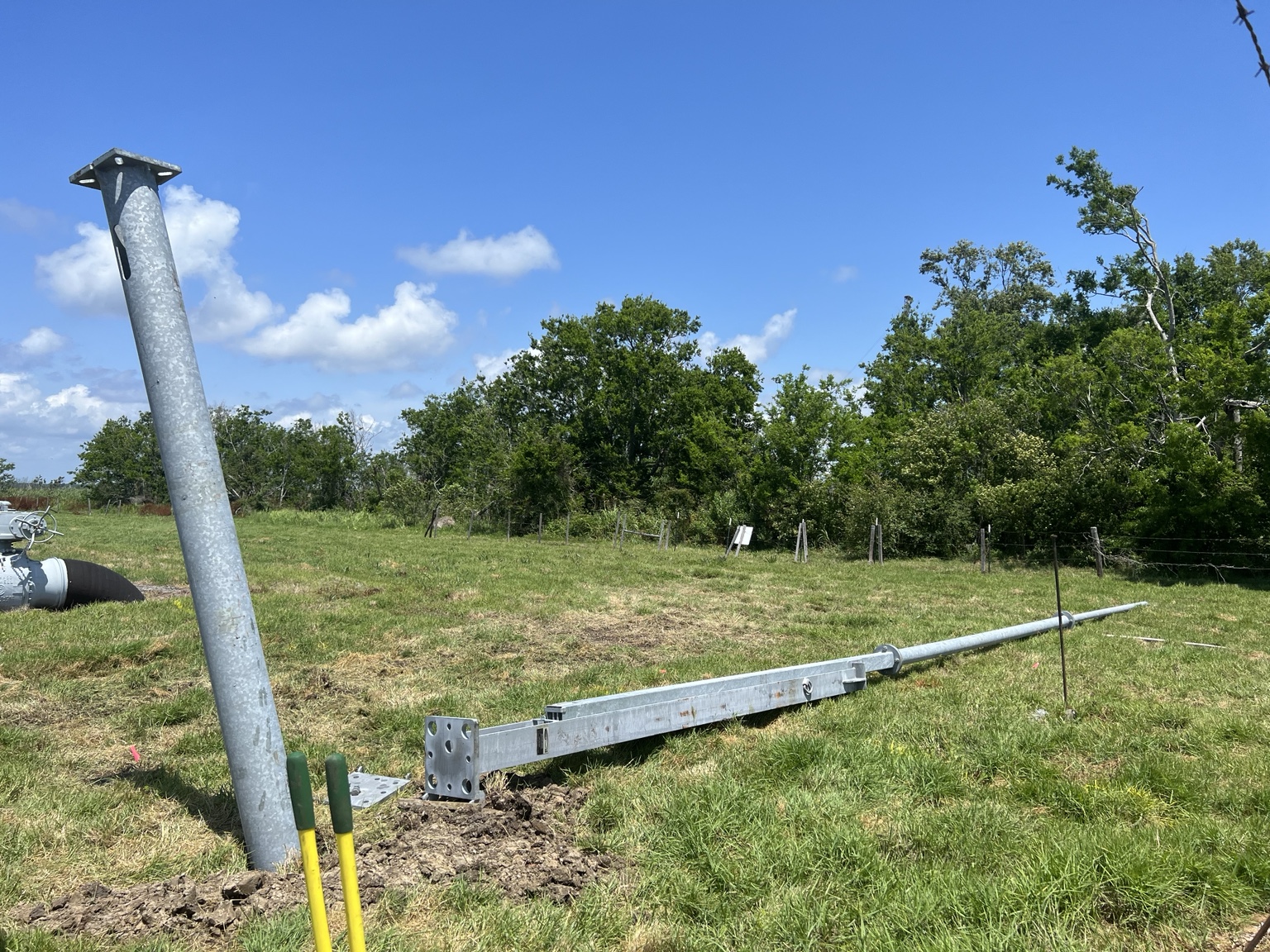
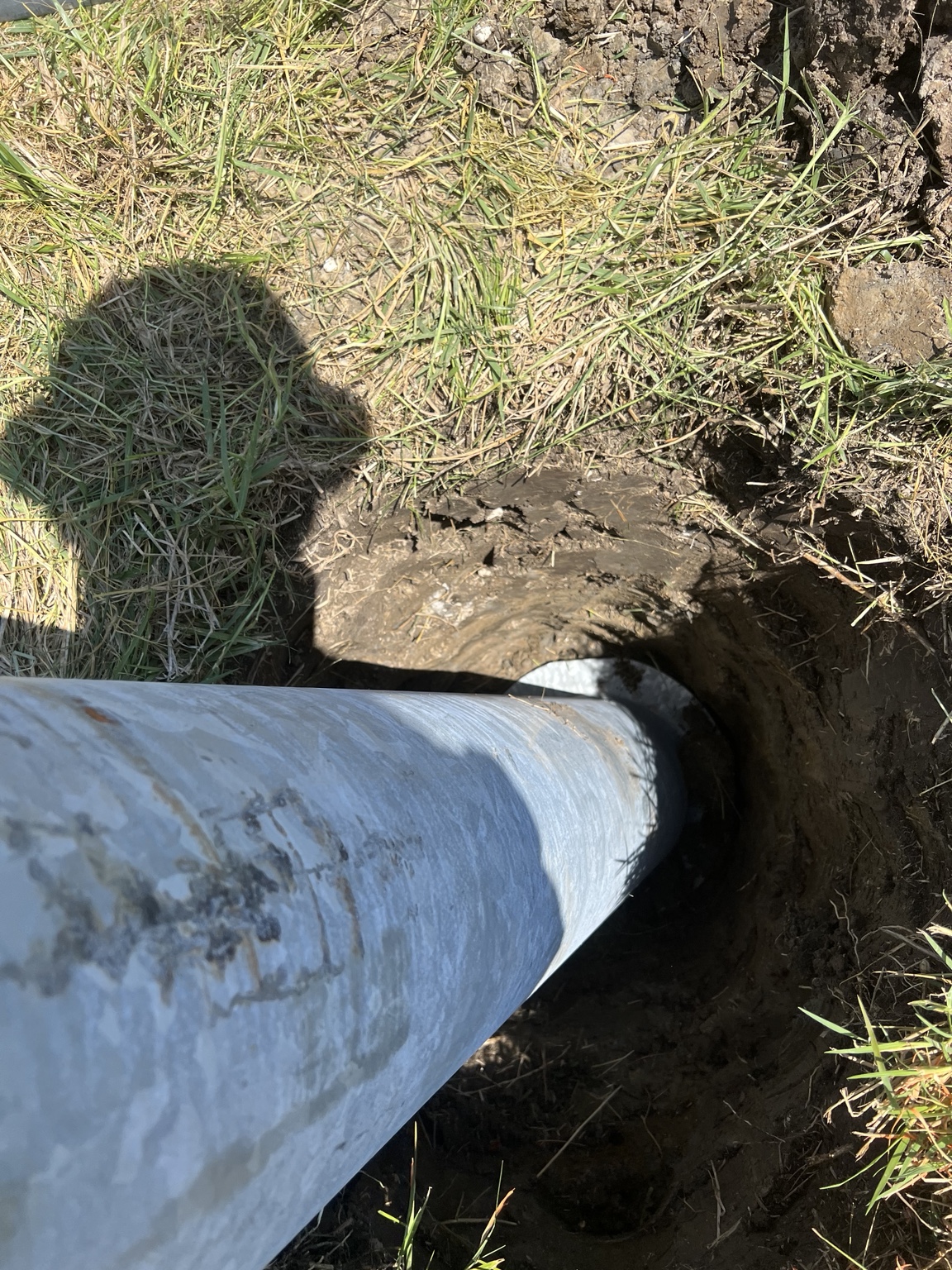
Completed Helical Foundation · Chauvin, Louisiana
One round-shaft pile installed approximately 14 ft deep.
Auger installed the foundation for a communications-support structure using a skid steer with a hydraulic drive-motor attachment. A three-person crew completed the confirmed work in a few hours from engineer-provided plans.
The helical pile and the galvanized structure shown in the photographs were supplied by others. Load testing was not required, and the final installation torque is not being published because it has not been confirmed.
Public scope limitThe customer and exact year remain unverified. This page does not assign electrical or communications-system work to Auger and does not use the project to establish a universal depth, torque, capacity, or production rate.
Project Videos
Installation and completed tower base.
Testing & Documentation
Torque is installation data—not a standalone capacity claim.
Torque, depth, load testing, observation, and product documentation may all contribute to project acceptance. The engineer and approved system information define how those items are used.
Applications
New work and existing foundations.
Helical piles are a secondary Auger service selected when the engineered system and site conditions make them appropriate.
Commercial & Industrial
New foundations, additions, structural expansions, equipment supports, and retrofit work.
Towers, Poles & Signs
Engineered compression, tension, or hold-down support for communications and specialty structures.
Foundation Repair
Underpinning, retrofit brackets, access excavation, concrete removal, backfill, and restoration when scoped.
Residential
New construction and foundation repair when the project fits Auger’s schedule, capabilities, and engineered requirements.
Helical Installation Safety
Control rotation,
pressure, and access.
Helical installation safety planning addresses underground and overhead utilities, equipment stability and swing, hydraulic pressure, rotating components, torque reaction, pinch and crush points, pile handling, work-zone access, and changing ground conditions.
Utilities confirmedEquipment stabilityRotation zoneHydraulic controlsPinch pointsStop-work authority
Equipment, procedures, exclusion zones, communications, and emergency controls are selected for the actual pile system, site, and installation method.
Questions & Answers
Frequently asked questions
What information is needed to evaluate helical piles?
Provide the engineer’s plans, design loads, available geotechnical information, site access, and whether the work is new construction or support of an existing foundation.
How are pile depth and capacity determined?
Depth and acceptance criteria come from the engineered design and project requirements. Installation records and any specified testing support acceptance; a depth or torque value alone is not a universal capacity guarantee.
Can helical piles be considered for residential work?
Yes. Residential foundations and underpinning can be reviewed along with commercial, industrial, and tower-related applications, using engineer-provided plans.
Have a different question? Contact Brad or read the general FAQ.
Request Helical Pile Pricing
Send the design,
site, and acceptance criteria.
Complete information helps Auger evaluate materials, installation equipment, access, connections, testing, records, restoration, schedule, exclusions, safety requirements, and pricing.
Include when available
- Structural and foundation plans
- Pile schedule and connection details
- Geotechnical report or soil information
- Design loads and application type
- Approved pile system and product requirements
- Depth, torque, refusal, and deviation criteria
- Access, utilities, clearance, and working-space limits
- Testing, inspection, reporting, restoration, and schedule requirements