
Access · Work Areas · Excavation Support · Final Condition
Prepare the site
for the work ahead.
Vegetation and debris clearing, access and work-area preparation, excavation support, grading, hauling, and cleanup when included in the construction scope.
EXISTING CONDITIONS→ACCESS→WORK AREA→FINAL CONDITION
Site preparation controls what follows.Utilities · Ground Conditions · Equipment Travel · Slopes · Water · Public Access · Exclusion Zones · Stop-Work Criteria
Site Safety ↓and protected areas identified
matting, and staging evaluated
hauling, and disposal assigned
and acceptance clarified
Land Clearing & Site Preparation
Prepare only what
the project requires.
The accepted scope identifies disturbance limits, protected features, access, material handling, utilities, grading, cleanup, and the exact condition required when Auger’s work is complete.
Vegetation Clearing
Removal of brush, overgrowth, and project-defined vegetation where clearing is needed for access, foundations, structures, staging, or construction.
Debris Clearing
Collection, separation, loading, hauling, recycling, or disposal of surface debris and project-generated material when included in scope.
Access Preparation
Preparation of equipment and delivery routes based on widths, turning space, slopes, clearances, ground conditions, utilities, and load requirements.
Work-Area Preparation
Setup and laydown areas prepared for drilling, lifting, material staging, assembly, excavation support, or other assigned construction work.
Matting Support
Project-specific mat supply, placement, maintenance coordination, and removal when access or equipment support requires it.
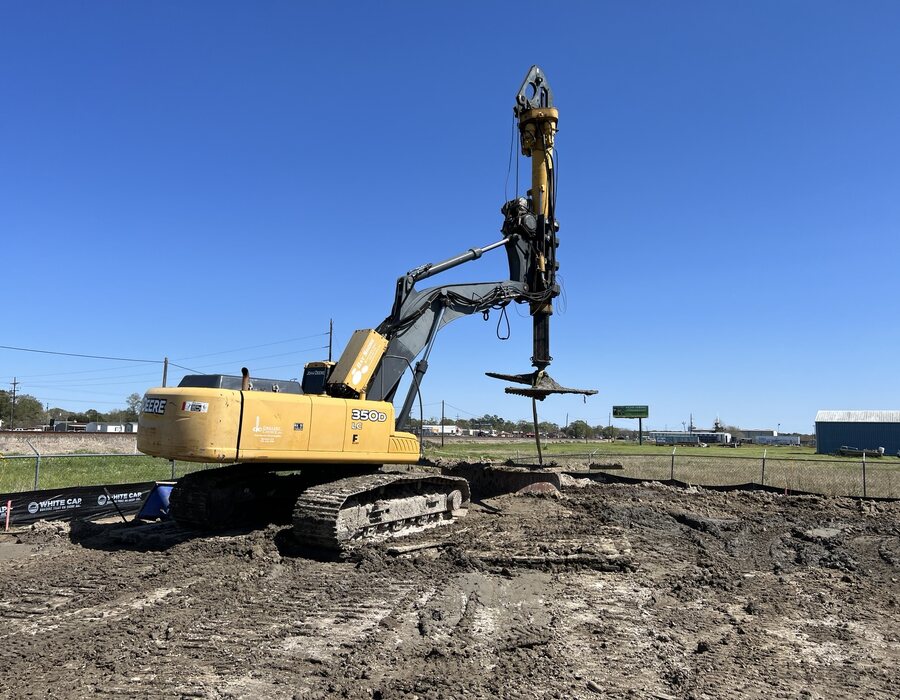
Excavation Support
Excavation, spoil handling, backfill, and related support coordinated with foundations, demolition, utilities, structures, or specialty work.
Grading & Dressing
Project-defined rough grading, surface dressing, work-area leveling, and final grading within the limits shown in the proposal.
Hauling & Cleanup
Loading, transport, debris and spoil removal, work-area cleanup, and closeout performed to the accepted project requirements.
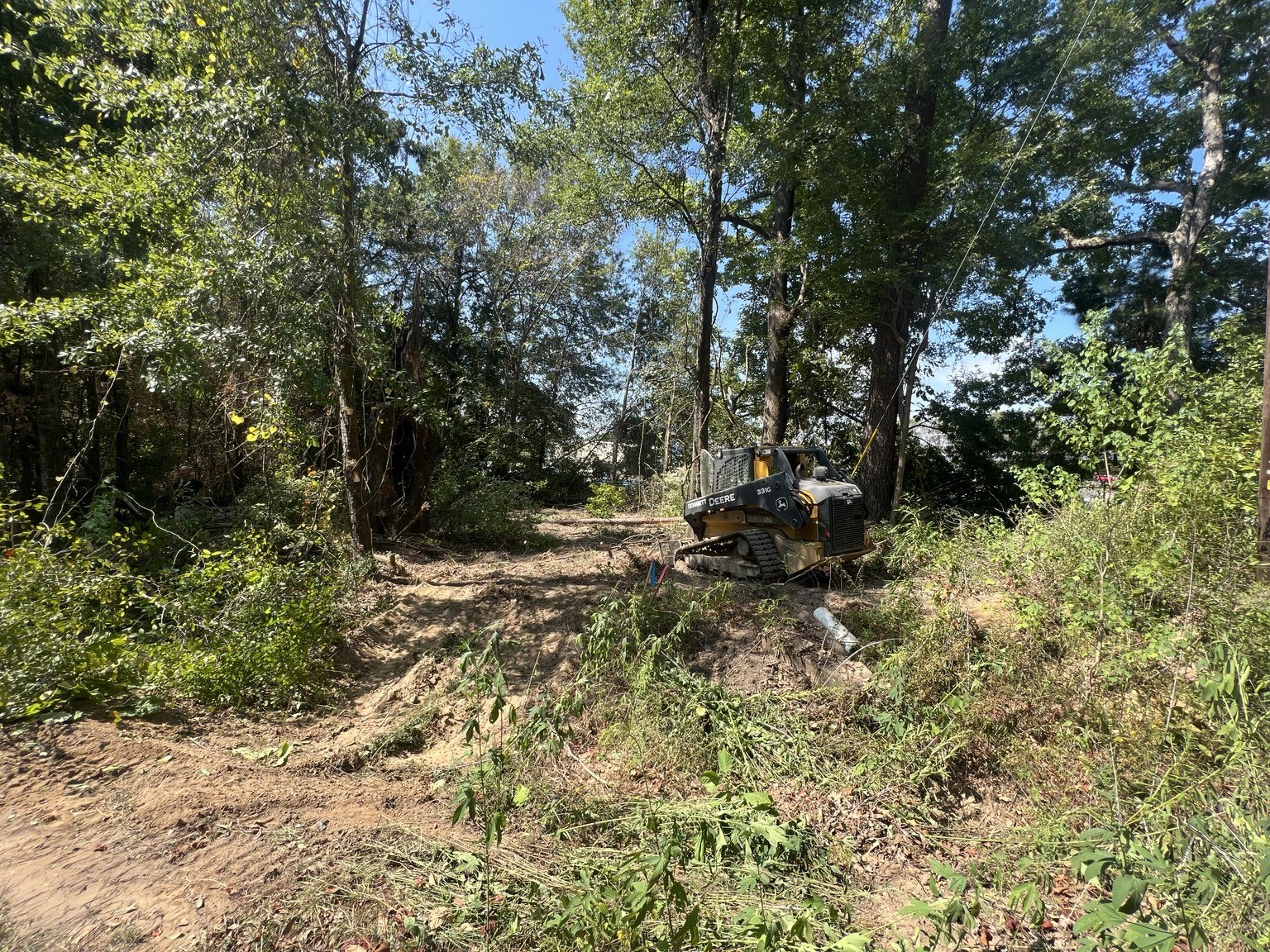
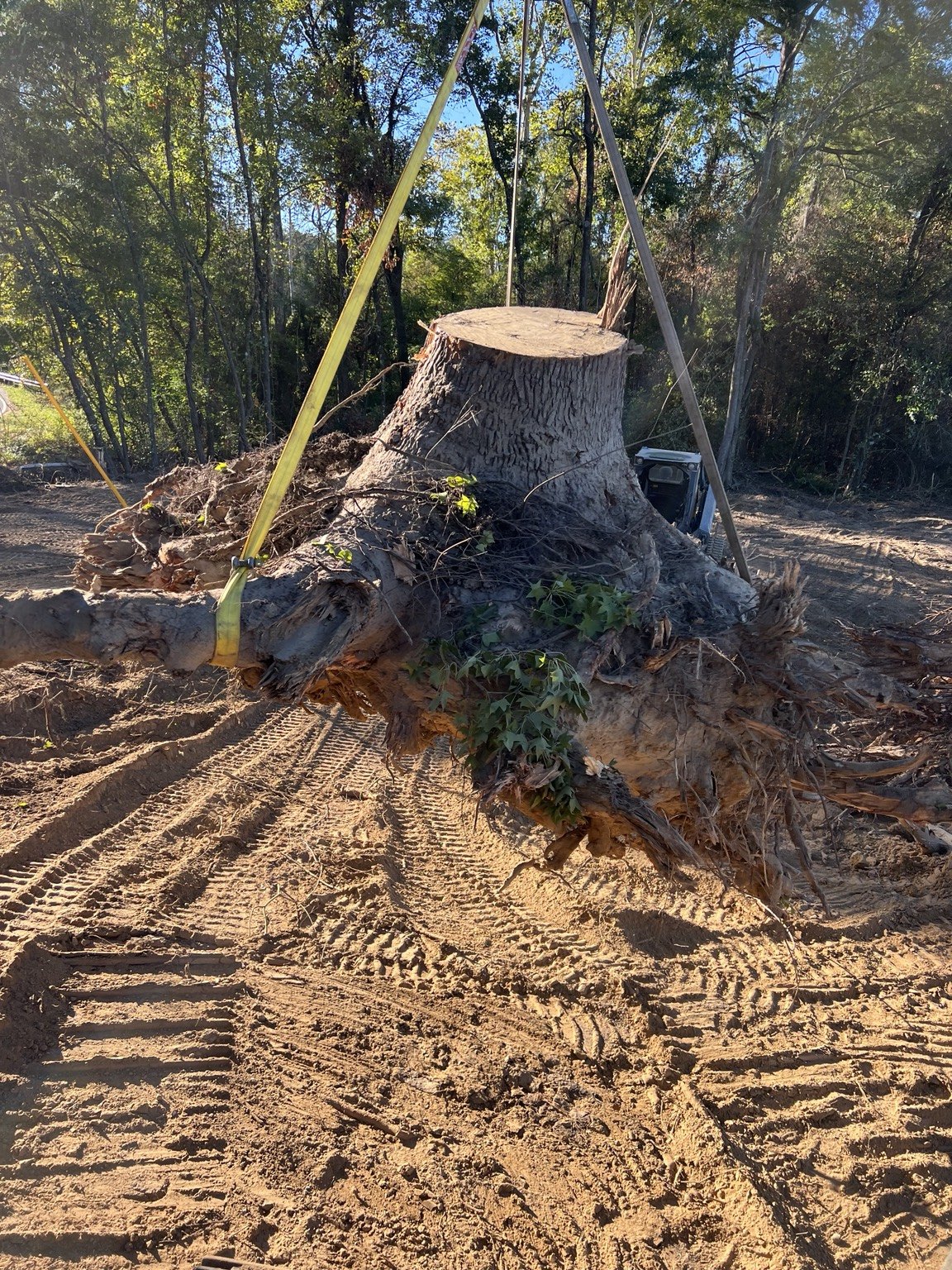
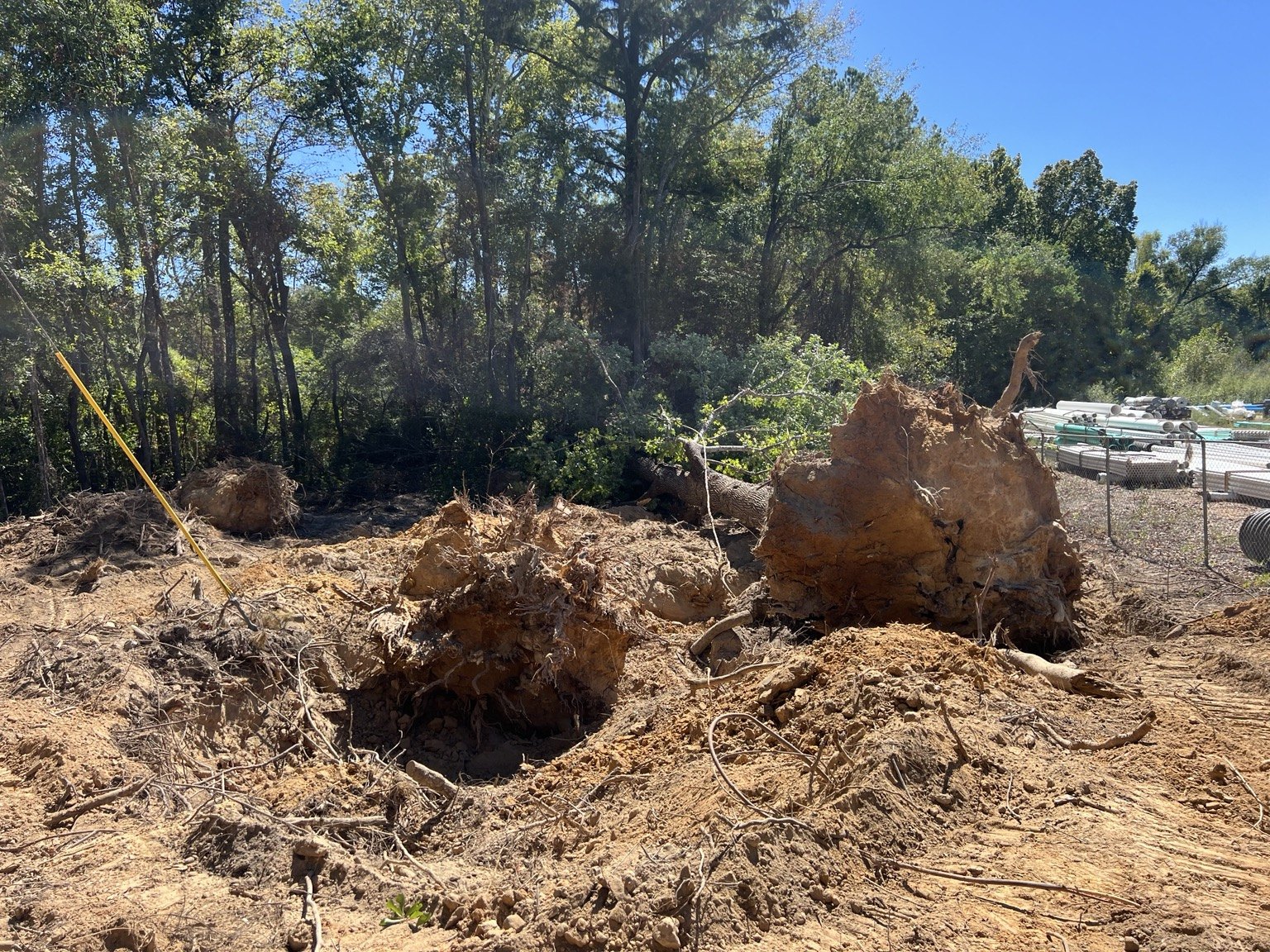
Site Clearing in the Field
Preparing ground for construction.
Vegetation clearing, stump and root handling, and work-area preparation shown in photos from the field. The limits and final condition depend on the assigned project scope.
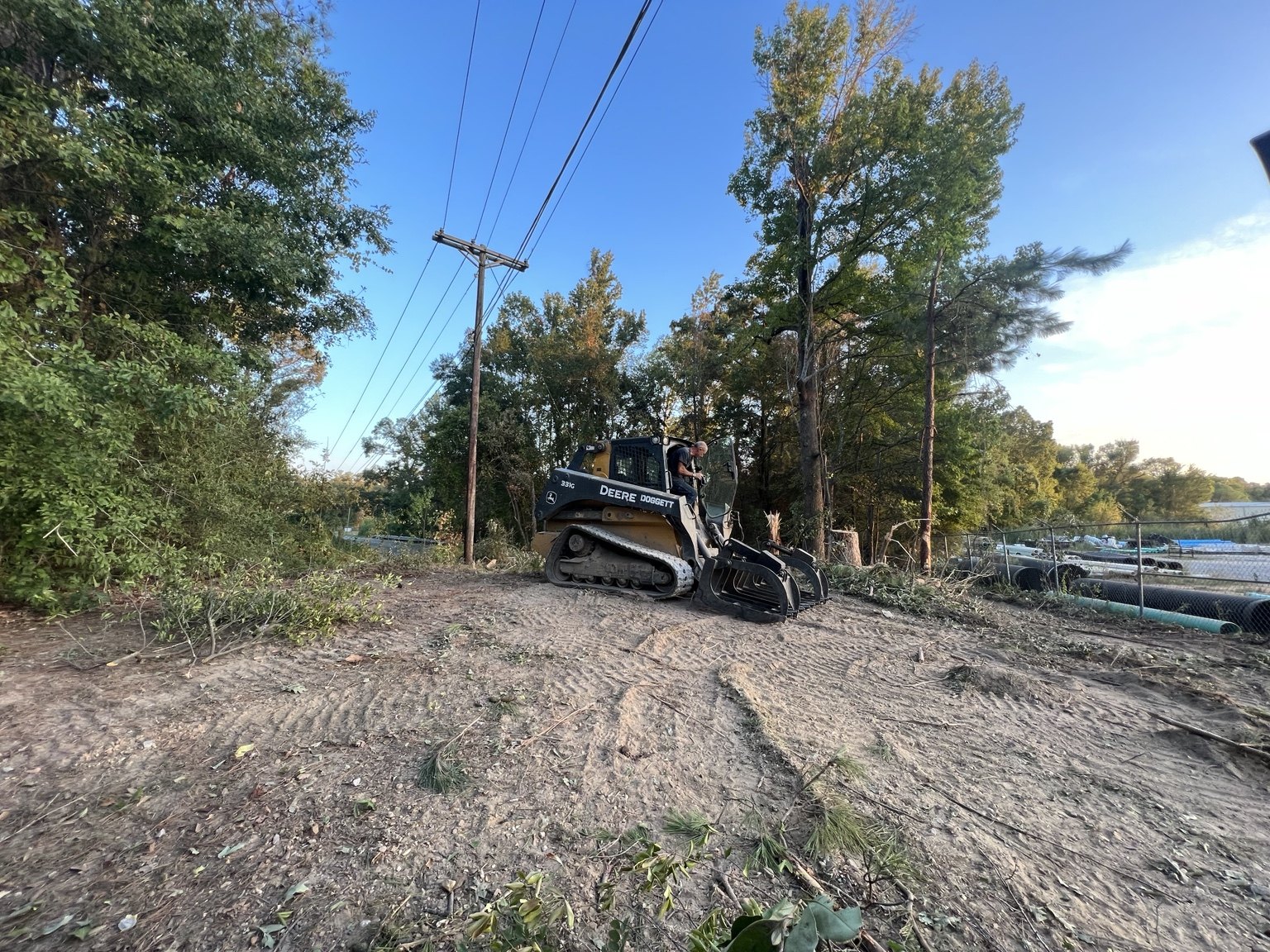
Scope Before Equipment
Draw the work limits before disturbing the site.
Clearing and site preparation can affect utilities, drainage, neighboring property, environmental controls, future foundations, and public access. Those boundaries must be understood before equipment enters the work area.
Clear
Vegetation, debris, obstructions, structures, or materials authorized for removal.
Protect
Trees, utilities, drainage features, structures, pavement, fencing, landscaping, and other items to remain.
Access
Equipment routes, deliveries, turning areas, mats, crossings, gates, traffic, and emergency access.
Stage
Laydown, spoil, debris, recycling, owner-retained material, fuel, equipment, and temporary work areas.
Finish
Backfill, compaction, rough or final grade, drainage, cleanup, restoration, documentation, and acceptance.
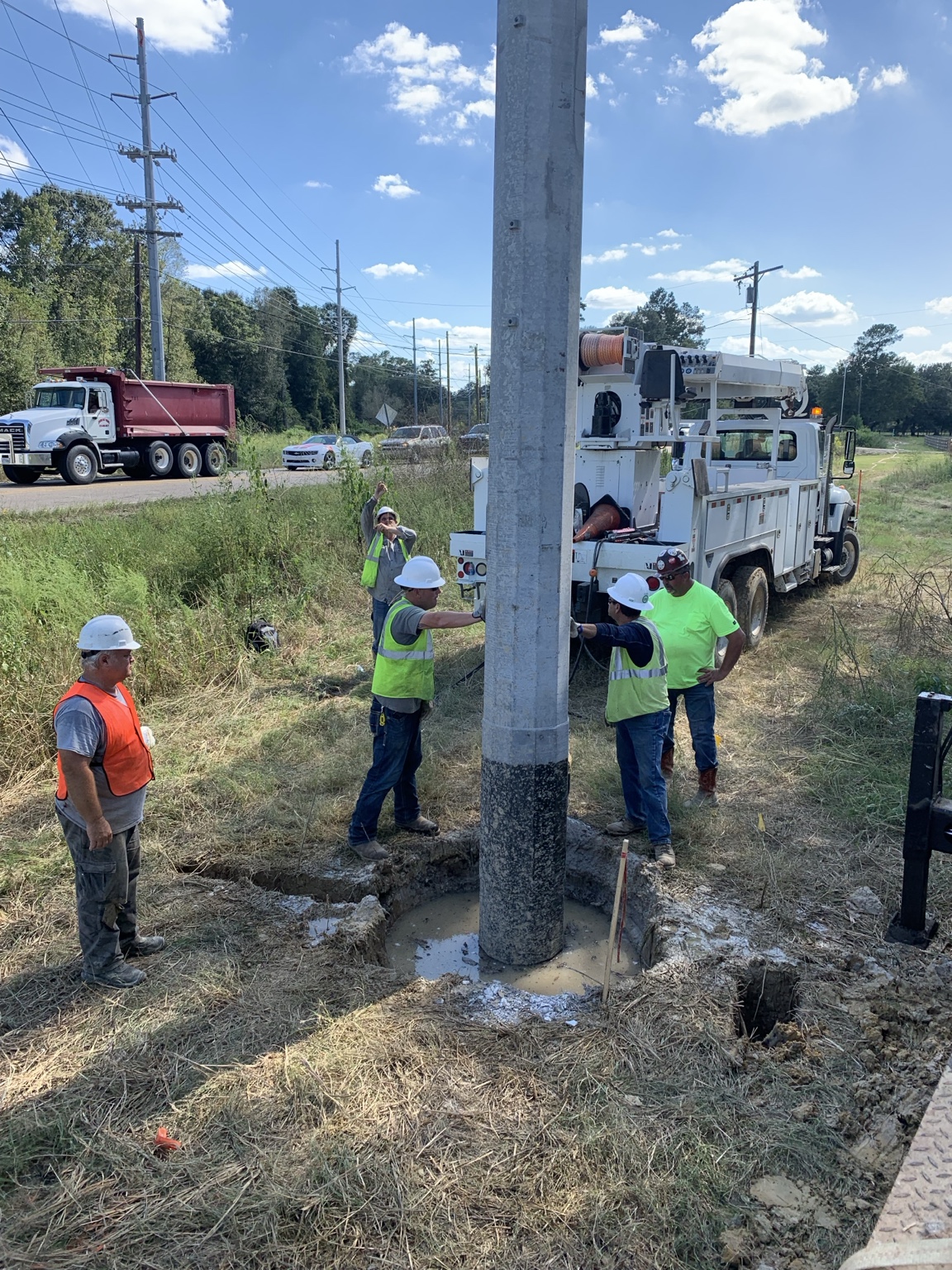
Livingston ParishVerified access-support scope
Completed Field Support
Access preparation and matting for transmission work.
On a Livingston Parish project, Auger cleared and prepared the access needed for its assigned work and supplied, placed, and later removed project matting. The mats remained in place for the line crew after Auger’s foundation and pole-support work was complete.
This was a defined access-support assignment. Auger did not construct a temporary road, and final site restoration was not part of Auger’s confirmed scope.
Public scope limitThis example verifies access preparation and matting support. It is not presented as a completed full-site land-clearing project, an acreage claim, or a universal production standard.
Information That Controls the Plan
Ground conditions
change the approach.
The site plan must connect intended use to the ground, access, weather, water, utilities, disturbance limits, equipment, material flow, and final condition.
Utilities & Existing Features
Locations, depth, status, markings, easements, crossings, protection, shutdowns, and authority.
Soil, Slopes & Water
Bearing conditions, soft ground, rutting, grades, stability, groundwater, drainage, rainfall, and weather response.
Equipment & Loads
Machine size, travel path, turning radius, setup loads, delivery vehicles, mats, staging, and recovery planning.
Material Destination
Reuse, stockpile, owner-retained material, recycling, offsite hauling, disposal requirements, and records.
Environmental & Permit Controls
Project-defined disturbance limits, erosion or sediment controls, wetlands, protected areas, burning, dust, noise, and permit responsibility.
Completion Standard
Rough versus final grade, tolerances, compaction, drainage, restoration, cleanup, inspection, documentation, and acceptance.
Scope Boundaries
Site preparation does not automatically include every civil or environmental responsibility.
Site-Preparation Safety
Control movement
across changing ground.
Clearing and site preparation safety planning considers overhead and underground utilities, equipment travel, slopes, soft or unstable ground, water, visibility, vegetation, hidden obstructions, public access, adjacent operations, debris handling, weather, and changing site conditions.
Utilities confirmedTravel paths controlledGround conditionsPeople separatedWeather responseStop-work authority
Written job-safety analyses and site-specific safety plans are developed when required. Work is stopped or revised when access, ground support, utilities, visibility, weather, or other conditions prevent the planned method from proceeding safely.
Questions & Answers
Frequently asked questions
What does site preparation include?
The contracted scope may include vegetation and debris clearing, access and work-area preparation, excavation support, grading, hauling, and cleanup. Not every civil or environmental responsibility is automatically included.
How are clearing limits established?
Identify the area to clear and the trees, utilities, drainage features, structures, and neighboring property to protect. The work limits and required final condition should be agreed before mobilization.
Can access preparation support a foundation project?
Yes. Access and setup preparation can be reviewed as part of a connected foundation assignment, based on the equipment, ground conditions, and site requirements.
Have a different question? Contact Brad or read the general FAQ.
Request Site-Preparation Pricing
Send the site limits,
existing conditions, and final grade.
Complete information helps Auger evaluate clearing, access, equipment, material handling, utilities, environmental controls, restoration, schedule, exclusions, safety requirements, and pricing.
Include when available
- Site plan, clearing limits, and protected features
- Existing and proposed grades, elevations, and drainage information
- Utility locations, status, easements, and crossing requirements
- Geotechnical, soil, groundwater, and bearing information
- Access widths, slopes, gates, clearances, and delivery requirements
- Debris, spoil, reuse, hauling, recycling, and disposal requirements
- Environmental, erosion, sediment, dust, and permit requirements
- Backfill, compaction, restoration, cleanup, and acceptance requirements